
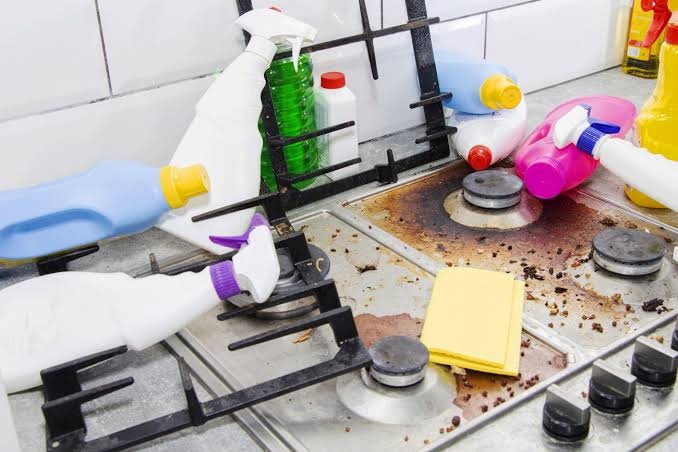
The cooking area is the heart of every home, but recent findings reveal a rather unsettling truth: the oven is one of the dirtiest and most overlooked appliances in the entire house.
While we religiously wipe down countertops and sanitise our sinks, the appliance we use to cook our food often accumulates layer upon layer of carbonised grease and food debris, unnoticed until it begins to smoke or affect the flavour of our Sunday roast.
Here’s why regularly cleaning your oven matters and what the true cost of neglect does.
The Impact Of The Hidden Grime
Why does the oven gather so much more grime than the fridge or the microwave?
Every time you roast, bake, or grill, microscopic particles of fat, oil, and food proteins become airborne. These particles circulate within the oven cavity and eventually settle on the walls, the door glass, and the fan.
Over time, these layers are repeatedly heated and cooled, undergoing a chemical process known as pyrolysis—effectively baking the residue into a hard, carbonised crust.
Because this happens gradually, we often stop noticing it. A “dirty” oven does not look dirty in the same way a muddy floor does; it looks “used.”
However, that brown, sticky buildup on the back wall or the black grime on the oven glass is essentially trapped bacteria and old food waste.
Because the oven is a warm, enclosed space, it creates an environment that can harbour contaminants, which are then recirculated onto your food every time you turn the appliance on.
Beyond The Smell: Health And Safety Risks
The most immediate sign of a neglected oven is often an unpleasant odour or a plume of smoke upon preheating.
While many people dismiss this as “part of the process,” it is actually a significant warning sign.
If your oven is smoking, it means that old food residue is burning off, releasing carbonised particles into the air. This can impact your indoor air quality, causing respiratory irritation for sensitive individuals or simply making your kitchen unpleasant to be in.
More concerning, however, is the fire risk. Grease is highly flammable. When fat accumulates on the bottom of the oven or near the heating elements, it can ignite at high temperatures.
Kitchen fires are among the most common household emergencies, and a significant portion of these incidents originates from neglected appliances. Keeping the oven free of this volatile buildup is a fundamental aspect of home safety that is often ignored until a near-miss occurs.
How A Dirty Oven Impacts Your Cooking
If you have ever wondered why your cookies brown unevenly or why your roast chicken seems to take longer to cook than the recipe suggests, your oven’s cleanliness might be the culprit.
Carbon buildup on the walls and the fan guard acts as an insulator, blocking the effective circulation of hot air. This creates “hot spots” where food burns and “cold spots” where it remains undercooked.
Furthermore, a heavily soiled oven struggles to reach and maintain its calibrated temperature.
The thermostat may be set to 200°C, but if the internal surfaces are coated in grime, the actual temperature may fluctuate significantly. This inconsistency can ruin delicate baked goods and compromise protein texture, leading to a frustrating cooking experience.
For those who take pride in their culinary efforts, a clean oven is not just a hygiene requirement; it is a tool for consistency.
The Financial Cost Of Neglect
There is a direct correlation between the cleanliness of your oven and its energy efficiency.
When the oven is clogged with debris, it has to work significantly harder to reach the target temperature. It consumes more electricity or gas to compensate for the heat lost to the carbon crust or the poor insulation caused by grime.
Over time, this results in higher utility bills and premature wear and tear on components, such as the heating elements and the fan motor.
Repairing or replacing these parts is far more expensive than routine maintenance. By keeping the appliance clean, you effectively extend its lifespan and keep your household running costs lower in the long run.
How to Know When You Need Expert Cleaning
While daily maintenance, such as immediately wiping up spills, is helpful, it is rarely enough to tackle the deep-seated carbon buildup that accumulates over months or years.
Many homeowners find that despite their best efforts with supermarket sprays and scrubbing brushes, the grease persists, particularly in hard-to-reach areas like the fan housing, the door seals, and the space between the glass panes.
If you find that your oven is consistently smoking, producing uneven results, or if the grime has become visibly impossible to shift, it might be time to look into professional solutions.
Many households across the UK choose to bring in local specialists, opting for a thorough deep oven cleaning in Manchester or surrounding regional hubs to handle the heavy lifting.
Experts use industrial-strength, eco-friendly solutions and specialist equipment, such as dip tanks, to remove stubborn carbon without damaging the appliance’s enamel or internal components.
This approach ensures that the oven is safe, hygienic, and performing at its peak.
Simple Habits To Extend Your Oven’s Lifespan
You can drastically reduce how often you need a deep clean by adopting a few preventive habits.
First, use a roasting bag or a lidded casserole dish whenever possible; this contains splatters and keeps the interior walls much cleaner.
Second, wipe the door glass once a week with baking soda and water mixture to prevent the brown “staining” from becoming permanent.
Third, invest in a high-quality oven liner. These mats sit at the bottom of the oven and catch drips and spills. When they become dirty, you can simply pull them out and wash them in the sink or the dishwasher, keeping the base of your oven pristine.
Finally, be mindful of the oven’s vent; ensuring it is free of dust and debris helps with airflow and prevents smells from becoming trapped.
Conclusion
As you can see, ignoring a dirty oven compromises food flavour, increases energy bills and is a potential fire hazard.
When you change how you approach this task and make it a regular part of your routine, you create a safer and more efficient kitchen environment.
Remember that a clean oven is the hallmark of a well-maintained home, and taking steps to address the invisible grime will pay dividends in both the quality of your meals and the safety of your living space.