
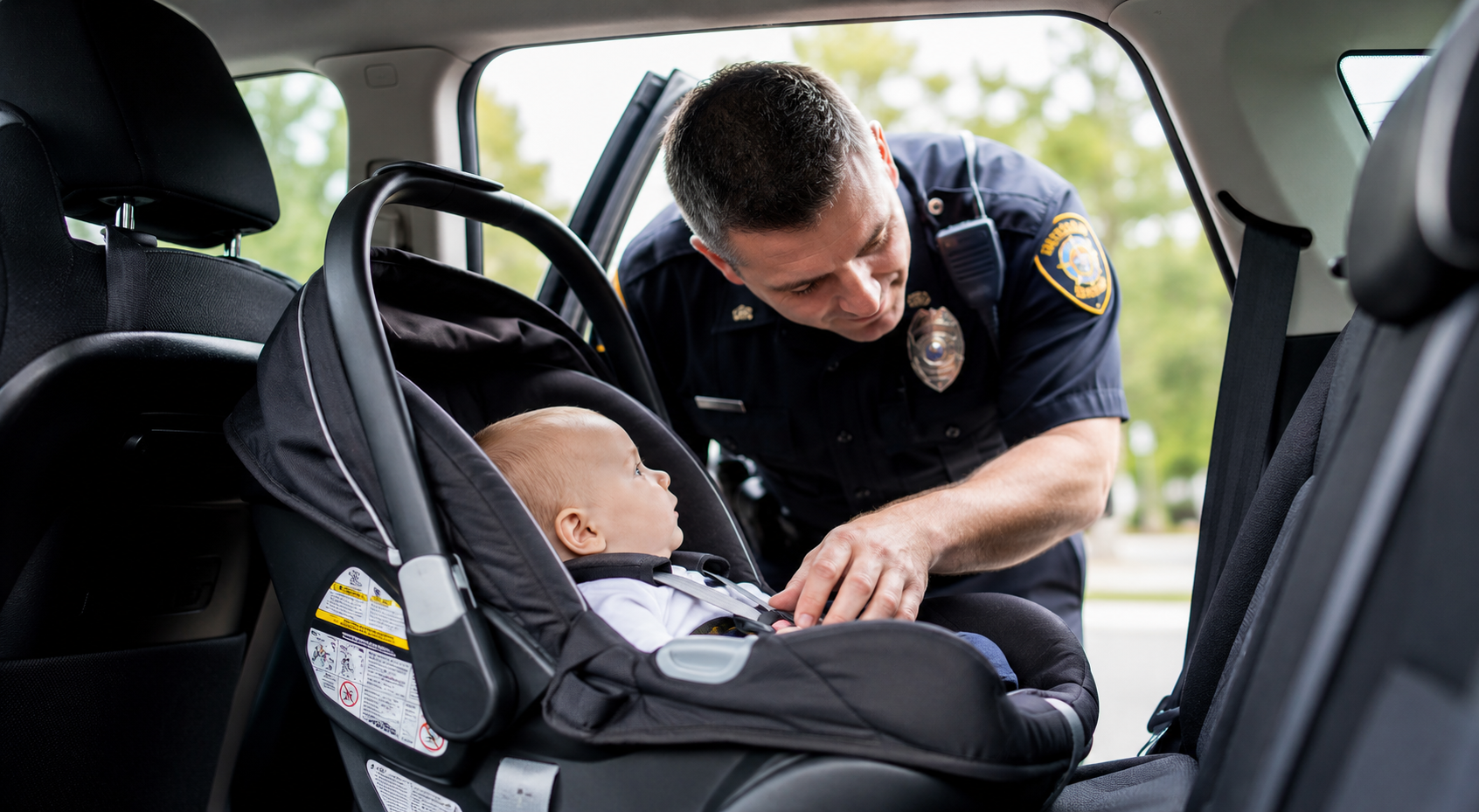
If you are a parent, grandparent, caregiver, or anyone who regularly transports an infant in Virginia, understanding the state’s car seat requirements is essential. Virginia has specific laws covering how young children must be restrained in vehicles, and infant car seat rules are especially important because babies are among the most vulnerable passengers in a crash.
Under current Virginia law, children must be properly secured in an approved child restraint system until they reach their eighth birthday. For infants and toddlers, Virginia also requires rear-facing travel until at least age two unless the child reaches the minimum weight limit for a forward-facing seat specified by the manufacturer. The law also addresses where child restraints can be installed and what happens when a vehicle does not have a rear seat.
What Are Virginia Infant Car Seat Laws?
Virginia’s child restraint law applies to children transported in motor vehicles manufactured after January 1, 1968. A driver is responsible for ensuring that a child up to age eight is properly secured in a child restraint device that meets applicable U.S. Department of Transportation standards. The law is based primarily on the child’s age and the proper use of the restraint according to the manufacturer’s instructions.
For infants, the most important requirement is rear-facing transportation. Virginia law says a child restraint cannot be forward-facing until the child is at least two years old or has reached the minimum weight limit for a forward-facing restraint specified by the manufacturer. This means parents should not turn a baby forward-facing simply because the child appears comfortable in the seat.
How Long Must a Baby Ride Rear-Facing in Virginia?
Virginia requires children to ride rear-facing until they are two years old or reach the manufacturer’s minimum weight requirement for a forward-facing child restraint, whichever applies under the law. In practical terms, parents should carefully follow the car seat manufacturer’s age, height, and weight limits rather than relying on a child’s size or apparent readiness alone.
The Virginia Department of Health also recommends keeping children rear-facing until they reach the limits of their rear-facing seat. A rear-facing position provides important protection for an infant’s head, neck, and spine because those areas are particularly vulnerable during a collision. Parents should therefore avoid rushing the transition to a forward-facing seat.
Where Should an Infant Car Seat Be Installed?
Virginia law requires child restraint devices to be placed in the vehicle’s back seat. This is particularly important for rear-facing infant seats because an active passenger airbag can create a serious hazard for a rear-facing child restraint.
If a vehicle does not have a back seat, Virginia law allows a child restraint to be installed in the front passenger seat only when the vehicle is not equipped with a passenger-side airbag or when that airbag has been deactivated. The Virginia Department of Health specifically advises that a rear-facing child seat should never be placed in front of an active airbag.
Does Virginia Require a Specific Infant Car Seat Type?
Virginia law requires a child restraint device that meets applicable U.S. Department of Transportation standards, but the law does not require parents to purchase one particular brand or model. Instead, the restraint must be appropriate for the child and properly used according to the manufacturer’s instructions.
Parents should choose an infant seat that fits both the child and the vehicle. The seat’s instructions provide important information about allowable height and weight ranges, installation methods, harness adjustment, and when the seat must be replaced or transitioned to another type of restraint. A more expensive seat is not automatically safer if it does not fit the vehicle or is installed incorrectly.
Infant Car Seat Installation Rules
Correct installation is just as important as selecting the right seat. Virginia safety guidance recommends installing the seat tightly and following both the child restraint manufacturer’s instructions and the vehicle owner’s manual. When properly installed, the seat should not have excessive movement.
For an infant riding in a rear-facing seat, the harness should be snug and properly positioned. The seat should also be installed at the angle specified by the manufacturer. Parents should avoid adding aftermarket cushions, padding, toys, or other accessories unless they are specifically approved for use with that particular restraint.
Virginia’s child passenger safety guidance emphasizes that proper use includes following the manufacturer’s directions and the seat’s height, weight, and age limits.
Does Virginia Law Require the LATCH System?
Virginia law does not require parents to use one particular installation method such as LATCH. Depending on the vehicle and car seat, an appropriate installation may use the vehicle’s seat belt or the LATCH system, provided the manufacturer’s instructions allow that method.
The important issue is not simply whether LATCH or a seat belt is used. The child restraint must be installed correctly and securely. Parents should check the vehicle owner’s manual and the car seat manual because installation procedures and allowable weight limits can vary between vehicles and seats.
When Can a Child Switch to a Forward-Facing Seat?
Under Virginia law, a child may not be placed in a forward-facing restraint until at least age two or until reaching the minimum weight limit for the forward-facing restraint established by its manufacturer. This is an important distinction because Virginia law does not establish one universal forward-facing weight for every car seat.
Once a child has outgrown the rear-facing seat according to its height or weight limits, parents can move to an appropriate forward-facing seat. The Virginia Department of Health recommends using a forward-facing seat with a five-point harness for as long as possible within the manufacturer’s limits.
What Happens After the Forward-Facing Stage?
Virginia requires children to remain properly secured in a child restraint device through age seven, meaning the requirement continues until the child’s eighth birthday. Depending on the child’s size and the limits of the forward-facing seat, the next stage may be a booster seat.
A booster seat is designed to position the vehicle’s lap and shoulder belts correctly across a child’s body. Virginia’s safety guidance recommends continuing to use a booster until the vehicle’s seat belt fits the child properly. Simply reaching a particular age does not necessarily mean a child is physically ready to use the seat belt alone.
When Can a Child Stop Using a Booster Seat?
Virginia law requires an approved child restraint through age seven. After a child turns eight, the child must use an appropriate safety belt system, but the Virginia Department of Health recommends continuing booster use if the vehicle’s seat belt does not fit correctly.
A proper seat belt fit means the lap belt sits low and snug across the hips or upper thighs rather than the stomach. The shoulder belt should cross the middle of the chest and shoulder rather than the neck. The child should also be able to sit upright with their back against the vehicle seat, keep their knees bent naturally at the edge of the seat, and maintain that position for the entire trip.
Is the Child Car Seat Law Enforced?
Yes. Virginia’s child restraint requirement is subject to primary enforcement. This means a driver can be cited for a child restraint violation without necessarily committing another traffic offense first. The Virginia Department of Health states that fines can range from $50 to $500 depending on the circumstances and applicable violation history.
The purpose of these requirements is not simply to impose penalties. Proper child restraint use is intended to reduce the risk of serious injury in a crash. Virginia transportation safety officials strongly encourage caregivers to use an appropriate child restraint correctly on every trip, even when traveling only a short distance.
Are There Exceptions to Virginia Infant Car Seat Laws?
There are limited exceptions. For example, Virginia law provides a medical exemption when a licensed physician determines through accepted medical procedures that using a child restraint would be impractical because of the child’s weight, height, physical unfitness, or another medical reason. The person transporting the child must carry a signed written statement from the physician identifying the child and explaining the grounds for the exemption.
Virginia law also contains vehicle-related and transportation-related exemptions. Certain types of vehicles and transportation, including specified public transportation, school buses, taxicabs, limousines, executive sedans, and farm vehicles, may be treated differently under the child restraint provisions. However, parents should not assume that every commercial or rideshare vehicle is exempt. Virginia’s Department of Health specifically states that Uber and Lyft are not categorized as taxicabs for this purpose.
What About Babies Riding in Rideshare Vehicles?
This is an area where parents should pay particular attention. Virginia’s Department of Health states that transportation network companies such as Uber and Lyft are not exempt from the child restraint law in the same way that taxicabs are.
Parents traveling with an infant should therefore plan to have an appropriate child restraint available rather than assuming that a rideshare driver will provide one. The safest approach is to make sure the infant’s car seat is compatible with the vehicle and can be installed correctly before beginning the trip.
Common Infant Car Seat Mistakes to Avoid
One common mistake is turning a child forward-facing too soon. Virginia law establishes a minimum point for forward-facing use, and parents should also consider the manufacturer’s height and weight limits. Another mistake is installing the seat incorrectly or failing to tighten the harness sufficiently.
Parents should also avoid placing a rear-facing infant seat in front of an active passenger airbag. Other mistakes include adding unapproved aftermarket accessories, ignoring the car seat’s expiration or usage instructions, and assuming that a seat is safe simply because it is installed in the vehicle.
How to Make Sure Your Infant Car Seat Is Safe
Start by reading both the car seat manual and the vehicle owner’s manual. Confirm that the seat is appropriate for your infant’s current size and that it is installed using an approved method. Check the harness carefully and make sure it is snug without being excessively tight.
Virginia’s child passenger safety program encourages caregivers to have car seat installations checked by certified child passenger safety technicians. Professional inspection can be especially useful for first-time parents or anyone who is uncertain about installation.
Does Virginia Require Babies to Ride in the Back Seat?
Yes. Virginia law requires child restraint devices to be placed in the back seat. The exception applies when a vehicle does not have a back seat; in that situation, the child restraint may be placed in the front passenger position only if there is no passenger-side airbag or the airbag has been deactivated.
Even when an alternative installation is legally permitted, parents should follow the vehicle and car seat manufacturer’s safety instructions. For infants in particular, the back seat is generally the preferred location.
Virginia Infant Car Seat Laws: Quick Reference
For most parents, the key points are straightforward. Infants must ride in a properly installed, approved child restraint. Children must remain rear-facing until at least age two or until they meet the manufacturer’s minimum weight requirement for a forward-facing restraint. Child restraints generally belong in the back seat, and children must remain properly restrained through their seventh year.
After age eight, children must use an appropriate vehicle safety belt, although a booster seat may still be necessary if the seat belt does not fit correctly. Regardless of the legal minimum, parents should prioritize proper fit, correct installation, and the manufacturer’s instructions throughout every stage of a child’s development.
Final Thoughts on Virginia Infant Car Seat Laws
Understanding Virginia infant car seat laws can help parents make safer transportation decisions and avoid common mistakes. The most important rule for infants is that they should remain rear-facing until at least age two or until they meet the manufacturer’s minimum weight requirement for a forward-facing seat. Child restraints must also be properly installed and used according to their instructions.
Virginia’s legal requirements provide a minimum safety standard, but parents can go beyond those minimums by keeping children rear-facing within the seat’s limits, using a properly fitted harness, choosing the back seat, and continuing booster use until the vehicle’s seat belt fits correctly. Laws and safety recommendations can change, so caregivers should verify current requirements when making important transportation decisions. This article is for general informational purposes and is not legal advice.