
The problem of outdoor lighting generally presents itself at a time when it is already too late. Energy prices go up unexpectedly. Fixtures stop working sooner than expected. Certain places are still poorly lit, which poses safety problems and is, in the first place, unsafe. As a result, a lot of property owners are left with systems that are retro and ineffective.
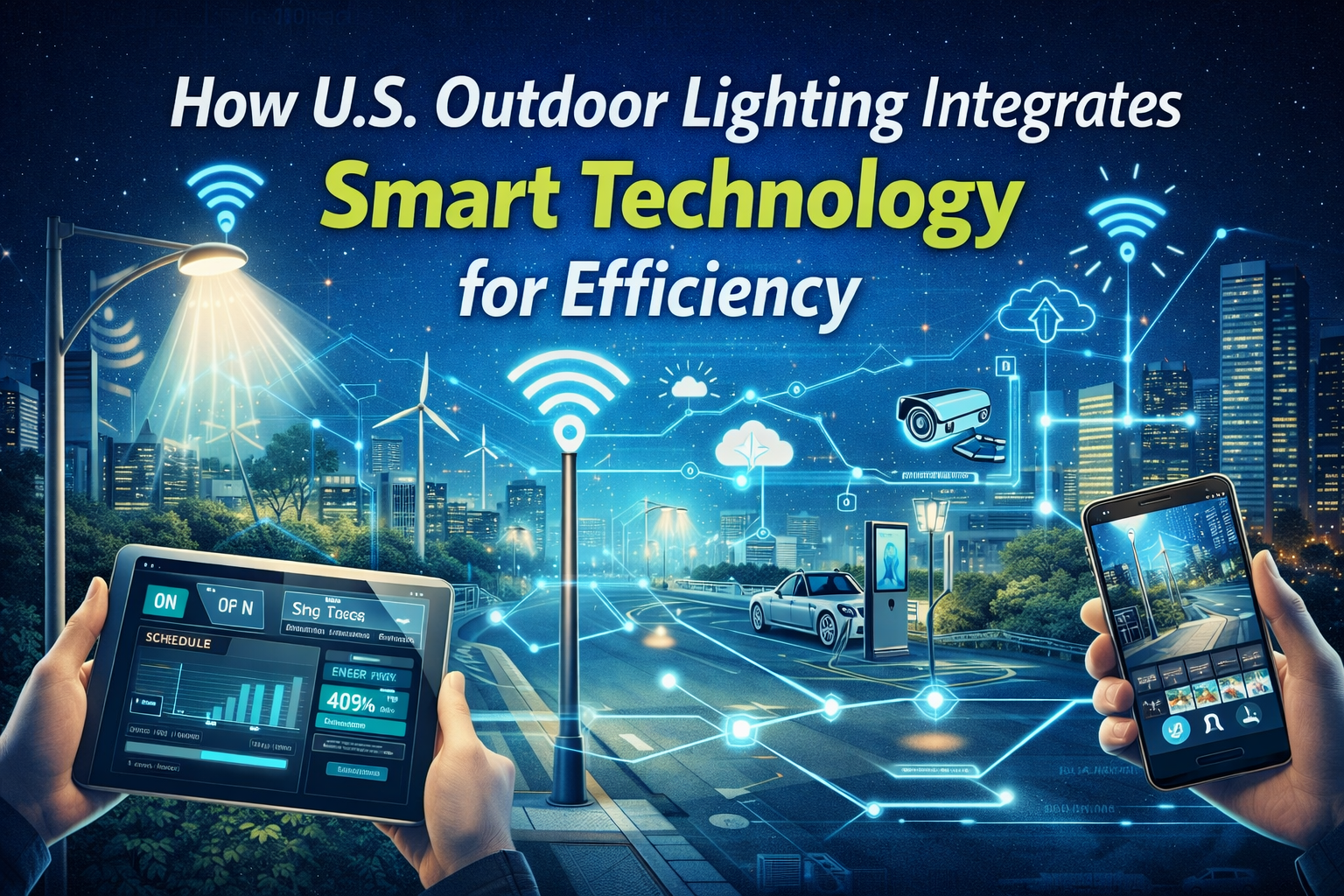
However, the solution lies in smart technology. Modern lighting systems are based on responses to actual situations, rather than using a fixed schedule or timetable or relying on manual control. They regulate brightness, follow usage, and therefore generate less waste automatically. Because of this, such a shift not only saves costs but also delivers improved performance.
In this context, this article is subdivided into the manner in which smart technology enhances the efficiency of outdoor lighting in the U.S.
1. Smart Controls Reduce Energy Waste
Companies like U.S. Outdoor Lighting focus on integrating smart control systems that actively manage energy use. These systems connect fixtures through centralized platforms, allowing real-time adjustments instead of static operation. Lighting no longer runs at full capacity when it isn’t needed.
Smart controls are based on automation to minimize unwarranted consumption. For instance, lights in low-traffic areas will be able to dim during times of inaction and then return to full brightness when movement is detected. This approach provides a solution by ensuring that the energy consumed is what is needed and not squandered in unused areas.
Furthermore, a research paper released recently established that adaptive lighting systems outdoors can help to save energy. The study’s findings indicate that smart controls are much more capable than classic timetables.
2. Sensor Data Improves Lighting Response
Outdoor lighting conditions are rarely constant. Weather changes, traffic patterns shift, and daylight hours vary throughout the year. Smart systems rely on sensors to handle these fluctuations with precision.
Motion sensors can be turned on when movement is detected, and this helps in saving energy and enhancing security. Ambient light sensors regulate the brightness depending on the natural light, eliminating excessive illumination in the early evening or at dawn. Such systems interoperate to provide a reactive light environment.
Additionally, one of the studies demonstrates that there is a decrease in waste in the energy utilized by sensor-based lighting systems without compromising visibility standards. The results also point towards the fact that real-time data results in smarter energy consumption.
3. LED Systems Enhance Long-Term Savings
Smart technology reaches its full potential when paired with LED lighting. LEDs already use less energy than traditional bulbs, but their compatibility with smart controls takes efficiency further.
LED lamps can be easily dimmed without compromising the quality of performance. In fact, it is feasible to adjust the brightness levels finely rather than depending solely on the traditional on-and-off processes. As a result, this leads to a reduction in energy consumption while maintaining effective and constant lighting.
Another advantage is durability. LED systems last much longer than conventional lighting solutions. Fewer replacements mean reduced maintenance costs and less operational disruption. Over time, this combination of efficiency and longevity leads to significant savings.
4. Remote Management Simplifies Maintenance
Handling outdoor lighting in large properties may be time-consuming. Moreover, conventional systems are also associated with manual inspections, which makes them expensive and sluggish in detecting problems.
However, this is made easy by smart lighting platforms via remote management tools. Facility managers are able to keep track of the performance of their systems, modify settings, and troubleshoot problems through a single dashboard. This level of control lessens the necessity of on-site checking all the time.
Automated alerts add another layer of efficiency. When a fixture fails or operates outside normal parameters, the system sends immediate notifications. This allows maintenance teams to respond quickly and keep lighting systems running without interruption.
5. Automation Improves Security Outcomes
Security is one of the dominant concerns in the outdoor setting. In situations where lighting is poor, it presents susceptible locations that are dangerous. Fortunately, smart technology can solve this problem because it makes lighting more predictable and responsive.
Automated lighting systems can simulate occupancy patterns or increase brightness when motion is detected in restricted areas. This immediate response discourages unauthorized activity and improves visibility for surveillance systems.
Well-lit environments also support safer navigation for pedestrians and drivers. Consistent lighting reduces blind spots and enhances awareness. Over time, these improvements contribute to fewer incidents and stronger overall site security.
6. Data Insights Support Better Planning
Smart lighting systems generate detailed data over time. Information on usage patterns, peak activity hours, and energy consumption becomes readily available. This data provides a clear picture of how lighting systems perform in real conditions.
These insights can be applied by property owners to make informed decisions. For example, low-traffic zones are able to run on dim light, whereas popular areas can be given a specific, customized lighting setup. In this way, this practice ensures that resources are efficiently used without interfering with safety.
Additionally, long-term planning is also enhanced by data. Decision-makers can use real performance patterns rather than making assumptions to base upgrades and investment decisions on solid evidence. Consequently, this results in a more precise budgetary process and overall system design.
Conclusion
Smart technology has changed how outdoor lighting systems operate. Instead of fixed and inefficient setups, modern systems adapt to real-world conditions. From automated controls to sensor-based adjustments, each element contributes to improved efficiency and reduced costs.
A practical first step is to evaluate where your current lighting system wastes energy. From there, consider integrating smart controls or upgrading to LED fixtures. Even small changes can deliver noticeable improvements in both performance and long-term savings.