
Introduction to Chameleónovité
The term chameleónovité refers to the fascinating family of reptiles commonly known as chameleons. These remarkable creatures are famous for their color-changing abilities, independently moving eyes, and unique hunting methods. Found mainly in Africa, Madagascar, parts of Asia, and southern Europe, chameleons have captured the curiosity of scientists, wildlife enthusiasts, and reptile lovers for generations.
What makes chameleónovité so fascinating is not just their appearance but their survival skills. These reptiles have evolved highly specialized bodies designed for climbing, camouflage, and hunting insects with impressive precision. Despite being popular in documentaries and pet discussions, many hidden facts about chameleons remain misunderstood or overlooked.
What Does Chameleónovité Mean?
Chameleónovité refers to the biological family of chameleons, scientifically known as Chamaeleonidae. This reptile family contains over 200 recognized species, each with unique characteristics, body shapes, and habitat preferences. While some species are tiny enough to sit comfortably on a fingertip, others grow large and display striking horn-like features.
The diversity within chameleónovité is one of the reasons researchers continue to study them. Their adaptability, survival mechanisms, and specialized body systems make them highly unique compared to many other reptiles.
The Origins and Evolution of Chameleónovité
Scientists believe chameleons evolved millions of years ago, with many species developing in isolated regions such as Madagascar. Geographic separation allowed different species to evolve unique features based on their environment, food availability, and predators.
Over time, chameleónovité adapted to forests, deserts, mountains, and tropical environments. These adaptations helped them develop gripping feet, rotating eyes, and specialized tongues that improved hunting success and survival.
Where Chameleónovité Species Live
Chameleons primarily inhabit warm climates and tropical ecosystems. Madagascar is considered the global hotspot for chameleon diversity because many species found there exist nowhere else on Earth. Africa also hosts a large variety of species, while smaller populations exist in parts of Europe, India, Sri Lanka, and the Middle East.
Their habitats range from rainforests to dry woodlands. Some species prefer living high in trees, while others stay close to bushes or shrubs. Environmental conditions strongly influence the size, color, and behavior of different chameleónovité species.
The Unique Appearance of Chameleónovité
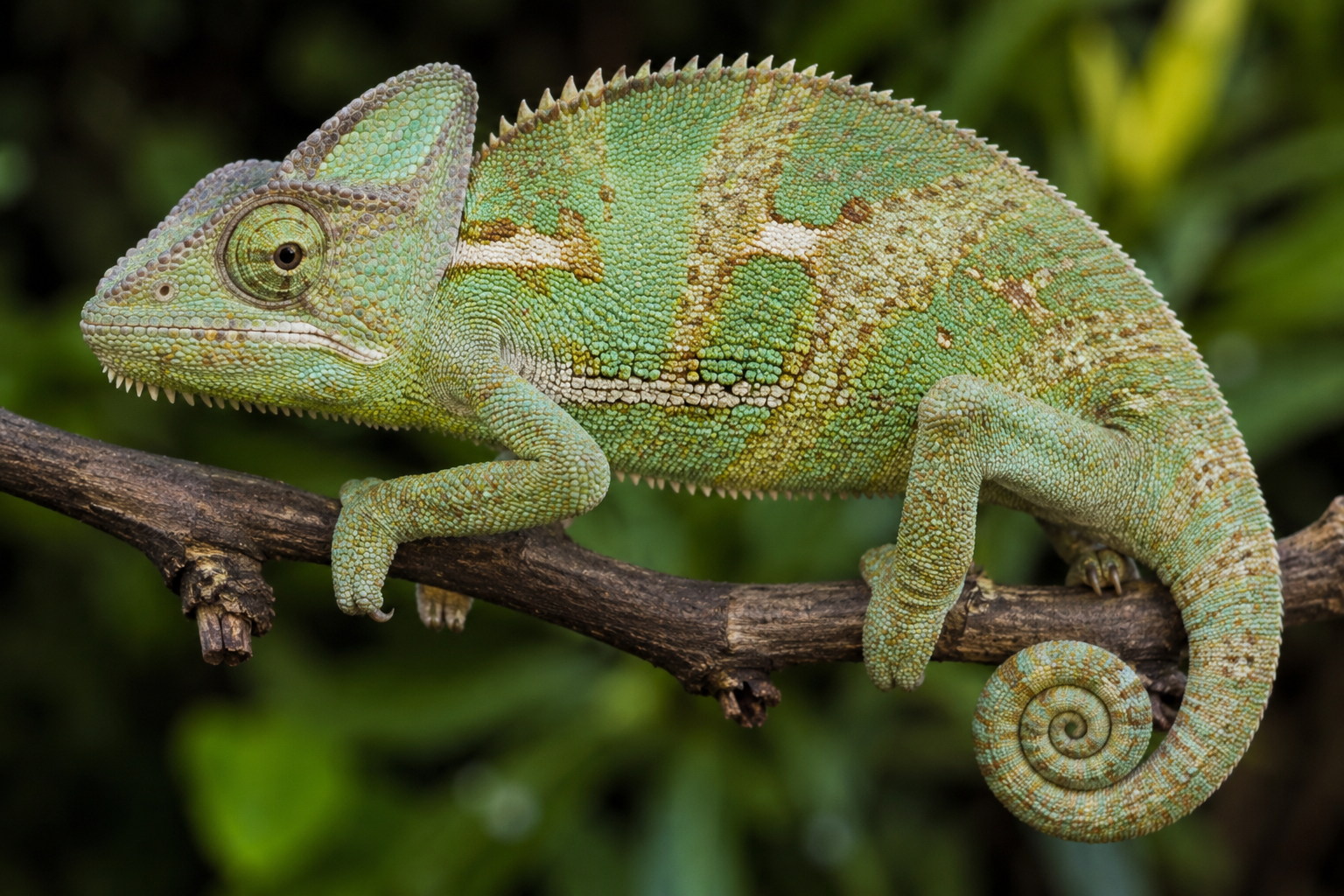
One of the most recognizable features of chameleónovité is their unusual appearance. Chameleons possess independently rotating eyes that can look in different directions simultaneously. This provides nearly 360-degree vision and helps them detect predators or prey without moving their heads.
Their feet are also specially adapted for climbing. Rather than standard reptile feet, chameleons have gripping structures that work almost like pincers, helping them move securely through branches. Their tails are prehensile, meaning they function almost like an extra hand for balance and support.
Do Chameleónovité Really Change Color?
Perhaps the biggest myth surrounding chameleónovité is that they change color only to blend into their surroundings. While camouflage can be one purpose, color-changing serves several important functions beyond hiding.
Chameleons often change color to regulate body temperature, communicate emotions, express stress, or attract mates. Bright colors may signal dominance or aggression, while darker shades can indicate discomfort or attempts to absorb heat. Their skin contains specialized cells that manipulate light reflection, creating stunning color variations.
How Chameleónovité Hunt Their Prey
The hunting method of chameleónovité is one of nature’s most fascinating biological systems. Instead of chasing insects, chameleons patiently wait and observe their surroundings until prey moves within range.
Their long, sticky tongue launches at extraordinary speed and accuracy. In some species, the tongue can extend farther than the body length itself. Once contact is made, insects are pulled back rapidly into the mouth, giving prey almost no chance to escape.
Diet and Feeding Habits of Chameleónovité
Most chameleons are insectivores, meaning insects form the majority of their diet. Crickets, flies, grasshoppers, moths, beetles, and caterpillars are commonly eaten depending on species and habitat.
Larger members of chameleónovité may occasionally consume small birds, lizards, or plant matter. Proper nutrition is essential for healthy growth, especially for captive chameleons that depend on carefully managed diets.
The Extraordinary Eyes of Chameleónovité
A defining characteristic of chameleónovité is their eye structure. Each eye moves independently, allowing chameleons to scan two different directions simultaneously. This helps them monitor predators and prey without exposing themselves to danger.
When prey is spotted, both eyes lock onto a single target for precise depth perception. This extraordinary visual coordination contributes greatly to their hunting success.
Reproduction and Life Cycle
Reproduction varies among different species of chameleónovité. Some lay eggs, while others give birth to live young. Egg-laying species often bury eggs underground where incubation can last several months.
Young chameleons typically become independent immediately after birth or hatching. Unlike mammals, parental care is minimal or absent, meaning survival depends largely on instinct and environmental conditions.
Why Madagascar Is Important for Chameleónovité
Madagascar holds special importance in the story of chameleónovité because it is home to an exceptional number of species found nowhere else. Isolation over millions of years allowed unique evolutionary traits to emerge.
Species from Madagascar range from tiny leaf chameleons to larger horned varieties with striking colors and dramatic body shapes. Conservation efforts there are critical for protecting biodiversity.
Threats Facing Chameleónovité
Despite their remarkable adaptations, many chameleónovité species face serious threats. Habitat destruction caused by deforestation, climate change, and illegal wildlife trade has reduced populations in many areas.
Urban expansion and agriculture also contribute to shrinking habitats. Since some species exist only in extremely small regions, environmental changes can place them at immediate risk of extinction.
Conservation Efforts for Chameleónovité
Wildlife conservation organizations continue working to protect chameleónovité populations through habitat preservation, breeding programs, and stricter regulations on wildlife trafficking.
Education also plays a major role. Helping communities understand the ecological value of chameleons encourages stronger environmental protections and sustainable practices.
Common Myths About Chameleónovité
Many myths surround chameleónovité, especially concerning color change. Some people mistakenly believe chameleons instantly match every background perfectly, but their color changes are more closely related to mood, temperature, and communication.
Another myth is that chameleons are aggressive reptiles. In reality, most species are shy, solitary animals that prefer avoiding confrontation whenever possible.
Hidden Facts About Chameleónovité You Might Not Know
One surprising fact about chameleónovité is that some species are incredibly small, measuring only a few centimeters in length. Others possess horns or crests that resemble miniature dinosaurs.
Another fascinating fact is that their tongue acceleration can exceed the speed of many fast-moving animal motions relative to body size. Combined with remarkable eyesight, this creates one of the most efficient insect-hunting systems in nature.
Chameleónovité as Pets: Things to Consider
While some people keep chameleons as pets, caring for them requires specialized knowledge. Proper temperature, humidity, lighting, and diet are necessary for survival and wellbeing.
Chameleons are not typically interactive pets like cats or dogs. Many species become stressed with excessive handling, making environmental care more important than physical interaction.
Why Chameleónovité Continue to Fascinate Scientists
Researchers remain fascinated by chameleónovité because these reptiles represent incredible examples of biological adaptation. Their color-changing skin, specialized eyes, and rapid tongue mechanics continue inspiring studies in evolution, physics, and biology.
Modern scientific technology has allowed experts to better understand how their skin reflects light, how their muscles create tongue speed, and how their visual systems process movement.
Final Thoughts on Chameleónovité
The world of chameleónovité is filled with wonder, science, and hidden surprises. From independently moving eyes and rapid hunting skills to breathtaking color changes, these reptiles showcase the creativity of evolution in extraordinary ways.
Whether you admire them for their appearance, biology, or mystery, learning about chameleónovité reveals just how complex and fascinating wildlife can be. As habitats face growing environmental pressures, understanding and protecting these unique creatures becomes more important than ever.