

All modern spaces are reliant upon constant electricity, but power management in multiple devices can be sloppy and potentially dangerous. Phones, laptops, monitors, and routers require constant connection, and wall outlets remain limited.
Consequently, cords become overlapped, plugs start to loosen, and overheating is cause for alarm. Further, low-quality solutions promote the risk of device malfunction and electrical risks.
This is why the choice of the right power strip is more important than most people think. A reliable solution would ensure the gadgets are safe, organized, and consistently powered. Consequently, an informed choice can prevent daily disruptions and long-term damage.
This article discusses the process of choosing a trusted power strip to plug several devices into, covering design, safety, capacity, usability, and durability to ensure your power arrangement functions efficiently and safely.
1. Strong Construction And Smart Outlet Design

Reliable power strip operation commences with physical assembly as well as outlet planning. Long durations of use are facilitated by heat-resistant housing, which does not warp, crack, or overheat.
Meanwhile, the tight socket grip ensures the plugs remain in place and are not randomly disconnected during movement. Outlet spacing is also an important aspect, as large adapters can otherwise occupy other ports.
Inadequate spacing inhibits usage and brings frustration. During the first evaluation step, pay close attention to how a power strip is designed to align the outlets, supporting multiple gadgets at once without overcrowding.
Thus, the combination of durable materials and a well-organized layout enhances safety and makes everyday use much more efficient.
2. Internal Safety Systems That Protect Electronics
In addition to structure, the reliability of any power strip is determined by internal safety. Electrical shocks take place without prior warning because of grid instability or load alterations.
Due to this reason, surge protectors absorb excessive voltage before it reaches connected devices. Overload protection also improves the safety of the device by reducing power when it goes over the limits that are considered to be unsafe.
With reset switches, everything can be restored within a short time without the need to unplug everything. These systems decrease the chance of overheating and interior damage.
As a result, built-in protection guarantees a constant power supply even when conditions are not predictable. A power strip can also serve as a safeguard instead of a weak point in your system by focusing on the safety features.
3. Power Capacity Aligned With Device Demand
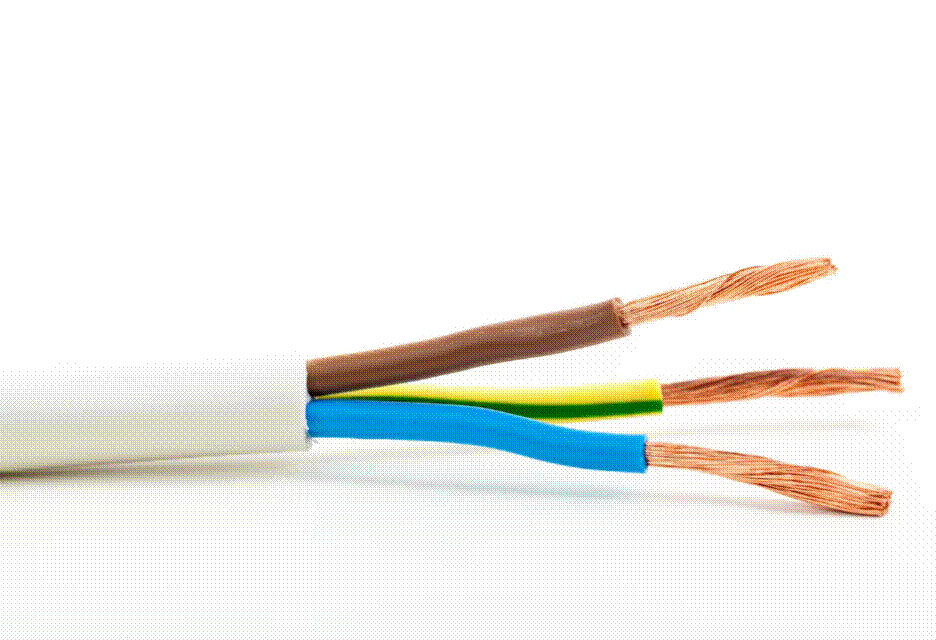
Power capacity should be equal to actual usage requirements. Each power strip has a limit of amperage and watts. A surpass of these limits causes tripped breakers, overheating, or unstable performance.
Moreover, desktop computers, monitors, or printers consume a large amount of power compared to chargers or lamps. Thus, integrating multiple high-demand gadgets without adequate capacity planning causes unnecessary load.
Checking ratings assists in balancing the load among the outlets. Consequently, devices get a continuous power supply. Proper selection of capacity means that a power strip can manage various gadgets safely, and yet without compromising performance.
4. Cord Length And Placement That Improve Usability
More importantly, the length of the cords determines whether a power strip fits in your environment. Short cords limit the location and frequently lead to pressure around wall outlets.
With longer cords, routing under the desk or around the walls can be done flexibly, thereby enhancing order. The insulation thickness is important as well because tough insulation can withstand the wear in busy areas.
Some designs support mounting options that keep the strip off the floor, improving airflow and reducing damage risk. Therefore, placement flexibility enhances both safety and comfort. Choosing an appropriate cord length helps a power strip integrate smoothly into daily setups.
5. USB Charging Support For Modern Devices
Today, many gadgets rely more on USB charging than traditional plugs, which changes how a power strip should function. Phones, earbuds, smartwatches, and tablets often charge through USB ports, and relying on separate adapters quickly consumes outlets.
Because of this, built-in USB ports improve efficiency by freeing standard sockets for larger electronics. Moreover, direct USB connections reduce cable clutter and simplify daily charging routines.
Some USB ports also adjust power output based on device demand, which supports stable and safe charging. However, total USB output capacity still matters when several devices charge at the same time.
Therefore, reviewing USB specifications helps ensure consistent performance. A power strip with balanced USB support better matches modern device habits without compromising core power delivery.
6. Certified Quality And Long Term Reliability
Long-term reliability separates dependable power strip options from short-lived ones. Safety certifications confirm that materials, wiring, and internal components meet tested electrical standards.
This reduces the risk of overheating, electrical faults, and fire hazards during extended use. Beyond certification, internal build quality plays a major role. Reinforced plugs prevent bending damage, while strong wiring maintains consistent power flow under repeated load.
Strain relief near cord entry points also protects against wear caused by frequent movement. Switch durability matters as well, since weak switches often fail before other components.
Together, these elements influence how well a power strip performs over months or years. Selecting certified and durable construction ensures steady performance and reduces the need for frequent replacement.
Conclusion
Selecting a reliable power strip for multiple gadgets requires careful evaluation rather than a quick choice. Construction quality, safety systems, power capacity, cord design, charging support, and certification all shape performance and protection.
Moreover, these factors work together to keep devices powered safely and efficiently. When chosen correctly, a power strip reduces clutter, prevents damage, and supports daily routines without interruption.
Therefore, applying these guidelines helps you manage power needs with confidence. A thoughtful selection ensures your power strip remains a dependable foundation for modern device use.