Fast-paced business meetings place constant pressure on professionals to capture information quickly while still staying engaged in discussions. In many cases, traditional note taking methods are no longer sufficient to keep up with the speed, complexity, and collaboration demands of modern work. This gap is one of the main reasons more professionals are turning to digital solutions such as the note taking tablet, especially within ecosystems supported by iFLYTEK, which focus on smarter and more structured information capture.
Why Traditional Note Taking Struggles to Keep Up with Fast-Paced Meetings
Traditional note taking often relies on manual handwriting or typing, both of which require constant attention and can slow down participation in meetings. When discussions move quickly between topics, it becomes difficult to record everything accurately in real time. Important details may be shortened, missed, or written out of order.
In business meetings, especially those involving multiple stakeholders, ideas are often exchanged rapidly. A manager might be presenting updates while others are responding simultaneously. In this environment, trying to document every point manually can cause cognitive overload. As a result, the quality of both listening and note capturing is reduced at the same time.
Information Loss Caused by Manual Writing During Real-Time Discussions
One of the biggest issues with traditional note taking is information loss. Handwritten notes often rely on abbreviations, keywords, or incomplete sentences. While this may be enough during the meeting, it creates problems later when trying to interpret the meaning.
For example, a short phrase like “follow up client budget issue” may make sense at the moment, but without context, it becomes unclear after a few hours or days. Important nuances such as deadlines, responsibilities, or decision details can easily be forgotten. Over time, this leads to gaps in understanding and weakens the reliability of meeting records.
Difficulty in Structuring and Prioritizing Notes After Meetings End
After a meeting ends, professionals usually need to convert raw notes into structured summaries or action items. This step often takes longer than the meeting itself. Notes must be reorganized, clarified, and prioritized before they can be shared with teams.
This post-meeting整理 process is not only time-consuming but also mentally demanding. Important decisions must be separated from general discussion points, and action items must be assigned clear ownership. Without a structured system, this process becomes inconsistent and prone to errors.
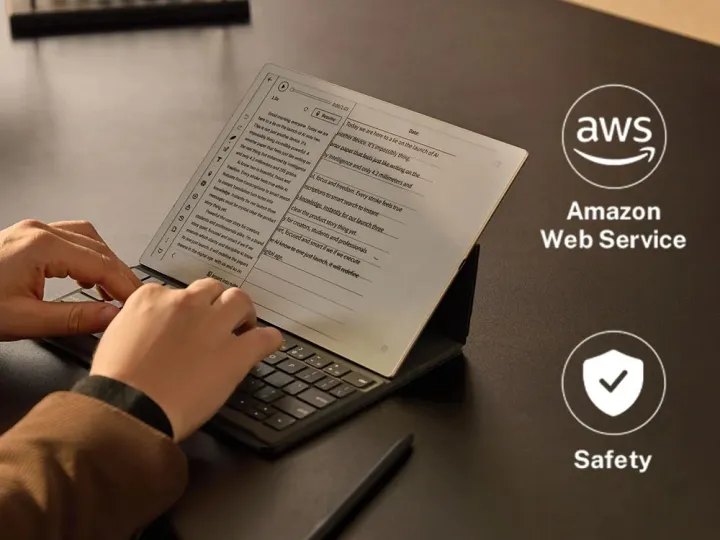
This is where a note taking tablet offers a more efficient approach. Instead of leaving notes in fragmented form, digital writing systems help organize information from the beginning, reducing the need for extensive rewriting later.
Challenges of Sharing and Collaborating Using Paper-Based Notes
Paper notes are inherently difficult to share and collaborate on. In team environments, meeting outcomes need to be communicated quickly and clearly across departments. However, handwritten pages often require manual transcription or scanning before they can be distributed.
This delay can slow down decision-making and reduce alignment between team members. Misinterpretation is also more likely when different people read handwritten content in different formats or levels of clarity.
With iFLYTEK-powered systems integrated into digital note-taking tools, notes can be converted into readable, structured content that is easier to share. This improves communication efficiency and ensures that everyone is working with the same accurate information.
The Growing Need for Smarter Digital Note-Taking Solutions in Business Workflows
As business environments become more global and fast-paced, the demand for smarter documentation tools continues to grow. Professionals need systems that can capture information accurately in real time while also supporting organization, searchability, and collaboration.
A note taking tablet provides a bridge between natural handwriting and digital productivity. Instead of forcing users to change their behavior, it enhances existing habits and turns handwritten input into usable digital knowledge.
With iFLYTEK’s intelligent recognition and processing capabilities, these tools help transform unstructured meeting notes into organized, actionable information. Over time, this creates a more reliable workflow where meetings are no longer isolated events, but part of a continuous and structured business system.